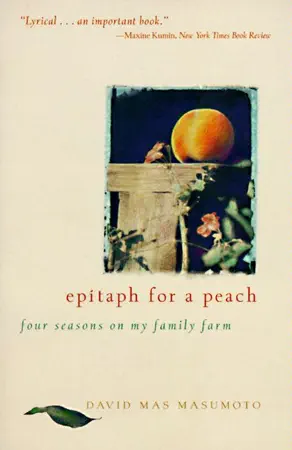
Epitaph for a Peach
★★★★★ 4.0 (12 ratings)
$1.99
Buy on Amazon View on Apple BooksPrefer it in print? See every format on Amazon →
Price on Apple Books. Amazon’s price may differ.
- Published
Description
An organic farmer fights shifting markets and summer heat to save a family farm and California’s last truly juicy Sun Crest peaches.
A lyrical, sensuous and thoroughly engrossing memoir of one critical year in the life of an organic peach farmer, Epitaph for a Peach is "a delightful narrative . . . with poetic flair and a sense of humor" (Library Journal).
Masumoto grounds each season in family tradition, following three generations who hand-pack fruit and tend eighty-five-year-old grapevines in the valley heat. Across eighty acres, the farm becomes a living patchwork of vetches and weeds, testing whether traditional flavor can survive the modern market.
The narrative follows a grower who trades synthetic sprays for clover cover crops while coaxing flavor from old trees. Line drawings.
Food Writing: Sensory reflections celebrate the lost pleasure of the Sun Crest peach, an amber-gold variety so bursting with natural perfume that its juice dribbles down the chin.American Agriculture: Clear-eyed analysis exposes an industry obsessed with cosmetic red blush and indefinite shelf life, contrasting corporate agribusiness with small-scale fruit growing.Ecology and Nature: Targeted experiments with Bacillus thuringiensis bacteria and predatory gray ants suppress twig borers without applying toxic chemicals that contaminate groundwater.Cultural History: Generational reflections trace the Masumoto family from Kumamoto immigrant roots and wartime Arizona internment camps to decades of cultivating California soil.


