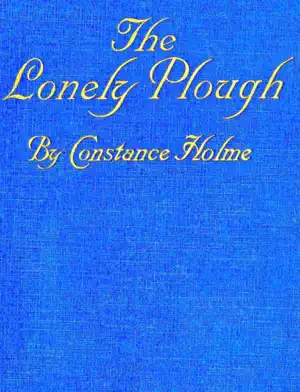
The Lonely Plough. 1914
$9.99
Buy on Amazon View on Apple BooksPrefer it in print? See every format on Amazon →
Price on Apple Books. Amazon’s price may differ.
- Published
Description
He felt very old.
Older than the old face at the table before him, than the office furniture, which had been there before he was born, than his father’s portrait over the desk; older even than the tulip-tree bowing its graceful head to his window. Very old.
They said the tulip-tree blossomed no more than once in a hundred years. It was an ancient tree, biding its time as ancient things may. But Lancaster felt older even than that.
It had been a trying day. Helwise had made it trying, to begin with. She had come down to breakfast in a black print flickering with white spots, and a whirlpool frame of mind, grievance after grievance spinning musically to the surface, only to be submerged again in the twinkling of an eye. In the intervals of digesting a troublesome correspondence, he found himself flinging life-belts of common sense after long-sunk bits of wreckage, gaining nothing but an impulse of helpless annoyance and a growing dislike for the flickering spots. Helwise was his aunt and housekeeper, and though she could add nearly a score of years to his thirty-seven, the weight of time lay infinitely lighter upon her shoulders than on his; perhaps because she twitched them so gracefully from under every descending yoke. Her delicate face and softly greying hair gave the impression of a serene mind and a fading constitution, and if you were not,
vulgarly speaking, up to snuff, you ran and did things for Helwise that Helwise ought to have been doing for you, and she always let you. But the serenity was sheer illusion and the constitution was tough. Closer inspection found her racing through life with the objectless hurry of a cinema express. She shimmered along a permanent way of mazy speech, and when you lived close to her you were always breathless and hurried, and the air was never quiet. She had the aimless velocity of a trundled hoop, and accomplished about as much.
Various printed notices drifted across the table on the rippling and bubbling of worries. She had a passionate habit of joining societies in all capacities, from President or Secretary to General Bottle-Washer, of getting herself appointed on innumerable county committees. As Lancaster’s aunt she was considered “the right person,” and as Lancaster’s aunt she took it for granted that his fingers should straighten the tangle of her ensuing bewilderment, and make her trundling path smooth.
He glanced through the circulars quickly, folding them neatly and adding them to his own collection. He was very business-like in his movements. The sheep and the goats of his correspondence were separated right and left; each envelope had its pencilled name and date; while the more important took cover in an elastic band and an inner pocket. His brown hands were methodical and deft; his weighing eyes implied a steady brain; his glance at the clock showed a sense of routine always alert. He was haste without hurry, while she, like the picture-train, rushed wildly and got nowhere.
A business-man born and made, you would have said of Lancelot Lancaster, not of stocks and shares or rustling parchments, but an acute, sound man of the land, a lean, light, open-air man, often in the saddle, with no aim beyond a clear-sighted judgment of terms and tenants, nor any desire more whimsical than a steady prosperity. It was only when you
looked at his mouth, with its hint of patience and repression, of longing held in leash and idealism shrouded like a sin, that you wondered if he was not, after all, only very well-trained.
Yes, Helwise had been particularly trying at breakfast. Her post had required a lot of explanation, and his own had included a letter from Bluecaster, one of the kindly, idiotic letters at which Lanty smiled and swore in a breath. There was also a second letter (which of course he had read first) totally contradicting the other; and at the bottom of all had been one from the London solicitor, telling him (unofficially) to take no notice of either. Bluecaster’s agent pencilled patient comments on the three unnecessary epistles.
He had spent the morning with a prospective tenant who had seemed to take a gloating delight in raising difficulties which would never have so much as occurred to anybody else; the type of sportsman who goes house-hunting for the sheer joy of pointing out to the lessor the contemptible disabilities of his property. Getting back for lunch at the usual time, he found that Helwise had had it early and eaten most of it, afterwards cinematographing off to some meeting at least an hour too soon; and the afternoon had seen him harried from pillar to post by an inspector who kept telephoning trysting-places and never turning up. Helwise was having tea at her meeting, so there was none for him unless he chose to order it, and just as his hand was on the bell, tenants of standing had arrived, wanting him. It was really the tenants who had made him feel old.
Facing him at the office-table, Wolf Whinnerah had the light full upon his fierce old face, with its sunk, dark eyes and thatch of silver hair. He was over seventy, but until recently he had carried his years with an almost miraculous lightness. Now, at last, however, the rigorous hand of Time had touched him suddenly, breaking him in a few weeks. Pneumonia, during a trying season, had carried him very near the
grave, and though he had fought his way back, he was nevertheless a beaten man. The strong bones of his keen face showed their clean lines under his furrowed skin. His height was dwindled, his step grown uncertain, his grasp weakened, his sight dulled. The end of the things that mattered had come to old Wolf Whinnerah.


