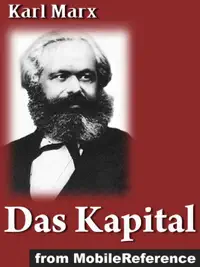
Capital
★★★★★ 4.5 (5 ratings)
£3.99
Buy on Amazon View on Apple BooksPrefer it in print? See every format on Amazon →
Price on Apple Books. Amazon’s price may differ.
- Published
In other languages: O Capital · Portuguese Le Capital · French Le Capital · Dutch Le Capital · German Le Capital · Spanish Le Capital · Italian Le Capital · Japanese Le Capital · Swedish
On the charts
| Position | Best | Days | |
|---|---|---|---|
| Political Science | #75 ▲10 | #30 | 10 |
For authors: put this badge on your website

Copy this code into your website or blog:
Description
'A groundbreaking work of economic analysis. It is also a literary masterpice' Francis Wheen, Guardian
One of the most notorious and influential works of modern times, Capital is an incisive critique of private property and the social relations it generates. Living in exile in England, where this work was largely written, Marx drew on a wide-ranging knowledge of its society to support his analysis. Arguing that capitalism would cause an ever-increasing division in wealth and welfare, he predicted its abolition and replacement by a system with common ownership of the means of production. Capital rapidly acquired readership throughout the world, to become a work described by Marx's collaborator Friedrich Engels as 'the Bible of the working class'.
Translated by BEN FOWKES with an Introduction by ERNEST MANDEL