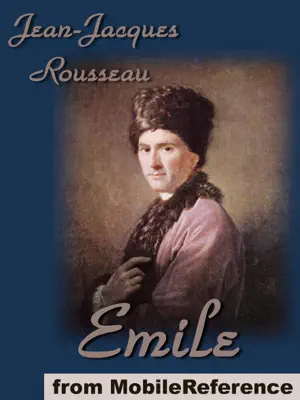
Emile, or On Education
£0.49
Buy on Amazon View on Apple BooksPrefer it in print? See every format on Amazon →
Price on Apple Books. Amazon’s price may differ.
- Published
- Genres
- PhilosophyNonfiction
Description
Emile: or, On Education (1762) which Jean-Jacques Rousseau believed to be the “best and most important of all my writings” is largely a philosophical treatise on the nature of man; it addresses political and philosophical questions regarding the individual’s relationship to society, in particular how the individual can retain what Rousseau saw as his natural goodness while participating in an inevitably corrupt society. In Emile, Rousseau attempts to describe a system of education that will enable the “natural man” that he outlines in The Social Contract (1762) to live within corrupt society. Rousseau includes the novelistic story of Emile and his tutor in order to illustrate how one might educate this ideal citizen; Emile is therefore not a detailed parenting guide, although it does contain some specific advice on raising children. It is the first complete philosophy of education in the Western tradition, as well as the first Bildungsroman, preceding Goethe's Wilhelm Meister's Apprenticeship by more than thirty years.
The text is divided into five "books"; the first three are dedicated to the child Emile, the fourth to an exploration of the adolescent Emile and the final book outlines the education of his female counterpart, Sophie, and Emile’s domestic and civic life.
Emile was banned and burned in Paris and Geneva as soon as it was published for the controversial section “Profession of Faith of the Savoyard Vicar,” but despite, or perhaps because of, this reputation, it became a European bestseller. Furthermore, during the French Revolution, Emile served as the inspiration for a new national system of education.
— Excerpted from Wikipedia, the free encyclopedia.