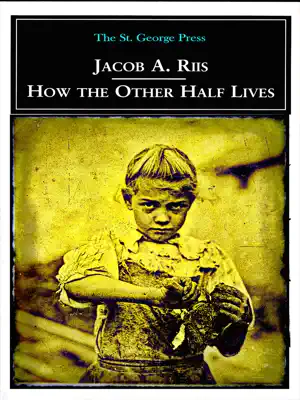
How The Other Half Lives
Jacob A. Riis & Philip Dossick
$19.00
Comprar en Amazon Ver en Apple Books¿Lo prefieres en papel? Todos los formatos en Amazon →
Precio en Apple Books. En Amazon puede ser otro.
- Publicado
En las listas
| Puesto | Mejor | Días | |
|---|---|---|---|
| Historia de EE. UU. | #60 ▲1 | #57 | 9 |
Para autores: pon este distintivo en tu web

Copia este código en tu web o blog:
Descripción
“For the corruption of the child there is no restitution…”
How the Other Half Lives was an early publication of photojournalism by Jacob Riis, documenting the squalid living conditions in New York City slums of 1890. It served as a basis for future "muckraking" by exposing slum conditions to New York City’s upper and middle classes. Riis's landmark work inspired Jack London to write a similar exposé on London's East End, called People of the Abyss.
JACOB RIIS (1849-1914) was an American social reformer and photojournalist. How The Other Half Lives quickly became a landmark in the annals of social reform. Riis documented the filth, disease, exploitation, and overcrowding that characterized the experience of more than one million immigrants through his early adoption of flash photography, enabling him to record interiors that could not otherwise be recorded in available light.