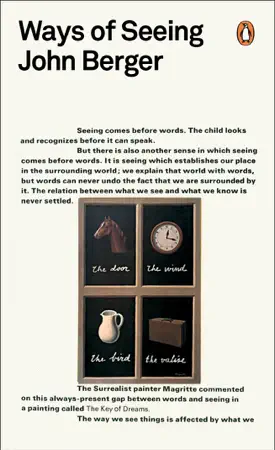
Ways of Seeing
8,49 €
Acheter sur Amazon Voir sur Apple BooksVous le préférez en papier ? Tous les formats sur Amazon →
Prix sur Apple Books. Le prix sur Amazon peut être différent.
Vous lisez beaucoup ? Essayez Kindle+ * · Comparer les abonnements
- Publié
Dans les classements
| Position | Meilleure | Jours | |
|---|---|---|---|
| Art et architecture | #56 ▼6 | #35 | 9 |
Pour les auteurs : affichez ce badge sur votre site

Copiez ce code sur votre site ou votre blog :
Description
How do we see the world around us? The Penguin on Design series includes the works of creative thinkers whose writings on art, design and the media have changed our vision forever.
"Seeing comes before words. The child looks and recognizes before it can speak."
"But there is also another sense in which seeing comes before words. It is seeing which establishes our place in the surrounding world; we explain that world with words, but word can never undo the fact that we are surrounded by it. The relation between what we see and what we know is never settled."
John Berger's Ways of Seeing is one of the most stimulating and influential books on art in any language. First published in 1972, it was based on the BBC television series about which the (London) Sunday Times critic commented: "This is an eye-opener in more ways than one: by concentrating on how we look at paintings . . . he will almost certainly change the way you look at pictures." By now he has.


