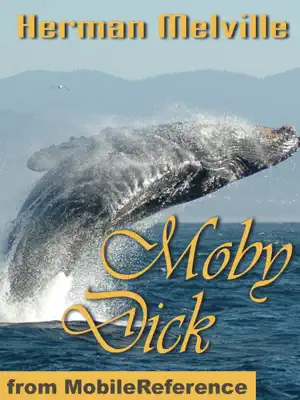
Moby Dick or The Whale
$0.99
Buy on Amazon View on Apple BooksPrefer it in print? See every format on Amazon →
Price on Apple Books. Amazon’s price may differ.
- Published
In other languages: Moby Dick · Japanese Moby Dick · Spanish Moby Dick · Portuguese Moby Dick · German Moby Dick · Italian Moby Dick · Dutch Moby Dick · French Moby Dick · Swedish
Description
Moby-Dick is an 1851 novel by Herman Melville. The story tells the adventures of the wandering sailor Ishmael and his voyage on the whaling ship Pequod, commanded by Captain Ahab. Ishmael soon learns that Ahab does not mean to use the Pequod and her crew to hunt whales for market trade, as whaling ships generally do. Ahab seeks one specific whale, Moby-Dick, a white whale of tremendous size and ferocity. Comparatively few whaling ships know of Moby-Dick, and fewer yet have encountered him. In a previous encounter, the whale destroyed Ahab's boat and bit off his leg. Ahab intends to exact revenge.
In Moby-Dick, Melville employs stylized language, symbolism, and metaphor to explore numerous complex themes. Through the main character's journey, the concepts of class and social status, good and evil, and the existence of gods are all examined as Ishmael speculates upon his personal beliefs and his place in the universe. The narrator's reflections, along with his descriptions of a sailor's life aboard a whaling ship, are woven into the narrative along with Shakespearean literary devices such as stage directions, extended soliloquies and asides.
- Excerpted from Wikipedia, the free encyclopedia.