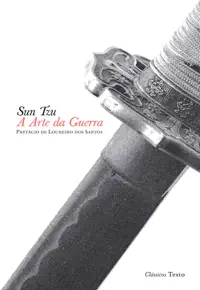
The Art of War
R$ 9,90
Comprar na Amazon Ver no Apple BooksPrefere em papel? Todos os formatos na Amazon →
Preço no Apple Books. Na Amazon pode ser diferente.
- Publicado
Descrição
The Art of War by Sunzi (active 6th century B.C.) is one of the most influential and enduring works on strategy ever written, transcending its origins as a military treatise to become a universal guide to leadership, conflict, and decision-making. Composed during a time of political fragmentation and constant warfare in ancient China, the text reflects the harsh realities of survival in an age where wisdom, foresight, and adaptability meant the difference between victory and annihilation.
The book is structured as a concise collection of thirteen chapters, each devoted to a critical aspect of warfare, such as planning, leadership, intelligence, terrain, discipline, and the management of resources. Rather than glorifying violence, Sunzi approaches war as a grave and costly undertaking that must be handled with utmost care. He emphasizes that the highest form of victory is one achieved without battle, through superior strategy, deception, and psychological advantage. This philosophical stance sets The Art of War apart from many other ancient military manuals, marking it as a work of deep intellectual and ethical reflection.
At the heart of Sunzi's teaching is the idea that knowledge is power—knowledge of oneself, one's enemy, and the ever-changing circumstances of the world. He repeatedly stresses flexibility and responsiveness, warning against rigid thinking and blind aggression. Success, according to Sunzi, lies in understanding the flow of events and acting in harmony with them, much like water adapting to the shape of the ground it traverses. This metaphorical style gives the work a poetic quality that enhances its philosophical depth.
Leadership is another central theme of the text. Sunzi portrays the ideal commander as calm, disciplined, wise, and morally grounded. Authority must be balanced with compassion, and strictness tempered with fairness. A leader who understands human nature and maintains the loyalty and morale of their followers is far more powerful than one who relies solely on force. These insights into leadership have made the book especially relevant far beyond the battlefield.
Over centuries, The Art of War has influenced generals, statesmen, philosophers, and scholars across Asia and the wider world. In modern times, its principles have been adopted in fields as diverse as business management, politics, sports, law, and personal development. Concepts such as strategic planning, competitive advantage, negotiation, and risk management all find clear parallels in Sunzi's teachings.
What gives The Art of War its lasting relevance is its universality. Though rooted in ancient warfare, its insights speak to any situation involving conflict, competition, or complex decision-making. The work encourages readers to think critically, act strategically, and value wisdom over brute strength. As both a historical document and a timeless guide, The Art of War remains a profound exploration of strategy, human behavior, and the art of achieving success with intelligence and restraint.