























Introduction
Welcome to our online bookstore, where we offer a wide selection of books on Latin American History. In this article, we will delve into the rich and diverse history of Latin America, exploring the political, social, and cultural developments that have shaped the region over the centuries. From the ancient civilizations of the Mayans and the Aztecs to the colonial era and the modern-day struggles for independence, Latin America has a fascinating story to tell.
Ancient Civilizations
The history of Latin America dates back thousands of years to the time of the ancient civilizations that once thrived in the region. The Mayans, Aztecs, and Incas were among the most powerful and advanced societies of their time, with sophisticated systems of government, agriculture, and architecture. Their achievements in art, science, and literature continue to inspire us today.
The Mayans
The Mayans were a highly advanced civilization that inhabited the Yucatan Peninsula in present-day Mexico and Central America. They developed a complex writing system, calendar, and mathematical system, and built impressive cities with temples, palaces, and observatories. The Mayans were skilled astronomers and mathematicians, and their achievements in these fields are still studied and admired by scholars around the world.
The Aztecs
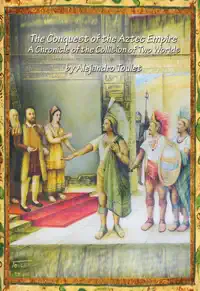
The Aztecs were the dominant civilization in central Mexico before the Spanish conquest in the 16th century. They built a powerful empire with a sophisticated social hierarchy, a complex religious system, and impressive feats of engineering, such as the city of Tenochtitlan, which was built on an island in the middle of a lake. The Aztecs were also known for their artistic achievements, including intricate stone carvings and colorful pottery.
Colonial Period
The arrival of European explorers and conquistadors in the Americas in the 16th century marked the beginning of a new chapter in Latin American history. The Spanish and Portuguese colonizers established vast empires in the New World, bringing with them their language, religion, and culture. The native populations were decimated by diseases brought by the Europeans, and forced labor and slavery became common practices in the colonies.
The Spanish Conquest
The Spanish conquistadors, led by figures such as Hernan Cortes and Francisco Pizarro, conquered the Aztec and Inca empires in a series of brutal military campaigns. The indigenous populations were forced to convert to Christianity, and their traditional way of life was forever changed. The Spanish established colonial governments and imposed their own laws and customs on the native peoples, leading to centuries of oppression and exploitation.
The Portuguese Empire
In addition to the Spanish conquest, the Portuguese also established a vast empire in Latin America, most notably in Brazil. The Portuguese colonizers enslaved millions of Africans to work on sugar plantations and mines, creating a diverse and multicultural society that still influences Brazilian culture to this day. The legacy of Portuguese colonization can be seen in the language, religion, and customs of the Brazilian people.
Independence Movements
By the 19th century, the people of Latin America had grown tired of colonial rule and began to fight for their independence. Inspired by the ideals of the Enlightenment and the French and American Revolutions, nationalist leaders such as Simon Bolivar and Jose de San Martin led successful movements to break free from Spanish and Portuguese control. The struggles for independence were long and bloody, but ultimately resulted in the creation of independent republics throughout Latin America.
Simon Bolivar
Simon Bolivar, often referred to as the "Liberator," was a Venezuelan military and political leader who played a key role in the independence of several South American countries. He led armies across the continent, fighting against Spanish forces and rallying the people to join the cause of liberation. Bolivar's vision of a united Latin America, known as Gran Colombia, ultimately failed, but his legacy as a hero of independence lives on in the hearts of the people.
Jose de San Martin
Jose de San Martin was an Argentine general and statesman who led the independence movement in southern South America. He was instrumental in the liberation of Argentina, Chile, and Peru from Spanish rule, and is revered as a national hero in all three countries. San Martin's military genius and strategic vision helped secure the independence of these nations and set the stage for the emergence of independent republics in the region.
Modern Times
Today, Latin America is a vibrant and diverse region with a rich cultural heritage and a complex political landscape. The legacy of colonialism and the struggles for independence continue to shape the social and economic realities of the countries in the region. From the indigenous movements in Bolivia and Ecuador to the socialist experiments in Venezuela and Cuba, Latin America remains a hotbed of political and social transformation.
Indigenous Rights Movements
The indigenous peoples of Latin America have long been marginalized and oppressed by the dominant cultures in the region. In recent decades, indigenous rights movements have emerged to demand recognition, autonomy, and respect for their traditions and way of life. Organizations such as the Zapatistas in Mexico and the Mapuche in Chile have fought for land rights, cultural preservation, and political representation, challenging the status quo and raising awareness of their struggles.
Political Instability
Latin America has a history of political instability, corruption, and authoritarian rule that continues to plague the region to this day. From military dictatorships in Argentina and Chile to populist leaders in Brazil and Venezuela, the countries of Latin America have faced numerous challenges in establishing stable and democratic governments. Economic inequality, social unrest, and external interference have all contributed to the turbulent political environment in the region.
Conclusion
As you can see, the history of Latin America is a complex and fascinating story that continues to unfold to this day. By exploring the ancient civilizations, colonial period, independence movements, and modern times of the region, we gain a deeper understanding of the challenges and triumphs of the people who call Latin America home. We invite you to explore our collection of books on Latin American History and discover the many layers of this rich and diverse continent.